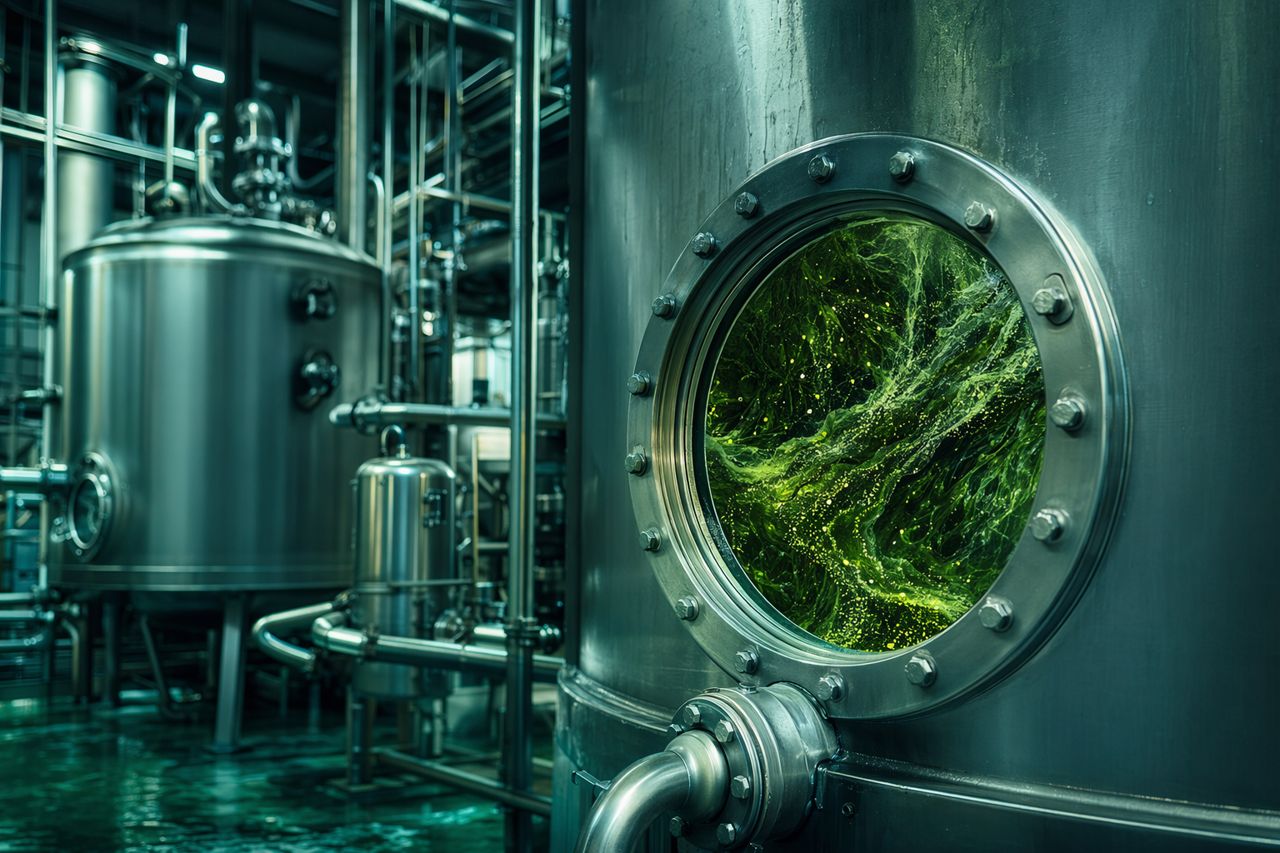
Enzyme supplier for seaweed processing plants
Enzymeswave helps seaweed ingredient factories use enzymes with control: better liquor release, lower slurry resistance, cleaner separation, and more repeatable ingredient specifications.
We work with extraction managers on brown, red and green seaweed lines where raw material variability, high viscosity, trapped liquor and difficult solids handling limit throughput. Supply is wholesale and bulk only, for seaweed ingredient manufacturers, resellers and distributors serving those plants, and biotech companies working with marine biomass. Every order is quoted individually.
Wholesale and bulk supply. Quote only. Send three things through the inquiry form: the product or enzyme class you need (or the process problem), the quantity per order or per month, and the destination country. Pack size, price and lead time are quoted per order.
Enzymes built around real extraction constraints
Seaweed processing is a balance: open the biomass enough to improve extraction, but protect the target fraction and final specification. Enzymeswave helps teams evaluate cellulase, xylanase, protease and supporting enzyme blends for controlled hydrolysis in wet seaweed systems.
Typical process goals include:
- Faster release of soluble fractions from macroalgae structure
- Reduced viscosity during extraction and transfer
- Improved screen, decanter and centrifuge performance
- Cleaner liquor separation with less trapped liquid in solids
- More predictable downstream concentration, drying and blending
- Better batch-to-batch consistency across seasonal raw material variation
Who we supply
| Buyer | What they usually ask for | What to include in the inquiry |
|---|---|---|
| Agar and carrageenan manufacturers | Pretreatment enzymes that fit the existing alkali, extraction and filtration steps | Seaweed species, process stage, bottleneck, volume per month |
| Alginate and seaweed-extract producers | Cell-wall opening and viscosity control before separation | Raw material form, extraction conditions, target extract |
| Biostimulant and liquid-extract makers | Hydrolysis support for liquid seaweed products | Product format, batch size, destination |
| Resellers and distributors | Repeat bulk supply for processors in their region | Products, quantities, destination country |
| Biotech companies | Enzymes for marine biomass work and scale-up | Substrate, process goal, trial or production quantity |
For agar, carrageenan, alginate and seaweed-extract operations
Different seaweed lines require different enzyme discipline. Enzymeswave works with processors who need to improve extraction performance without losing control of gel behavior, clarity, solids loading or finished ingredient targets.
Red seaweed: agar and carrageenan
For plants producing agar, carrageenan or red seaweed extracts, the wrong level of hydrolysis can compromise gel behavior, clarity or downstream recovery. Enzyme use here is a controlled pretreatment around the steps the plant already runs, not a new process. See enzyme pretreatment for carrageenan plants and enzymes for the agar processing line.
Brown seaweed: alginate and kelp extracts
Brown seaweed can bring heavy viscosity, mineral complexity and variable structure depending on species, harvest location and pre-treatment. Enzyme-assisted extraction can help open cell structures, manage biomass texture and improve movement through the plant, whether your priority is yield, flow, clarification or a tighter specification window.
Green seaweed
Green seaweed processing often requires careful control of color, odor, solids load and extract consistency. Enzyme support can improve release of target soluble components while helping reduce mechanical stress and downstream clarification load.
What each enzyme class does
Cellulase for cell-wall opening
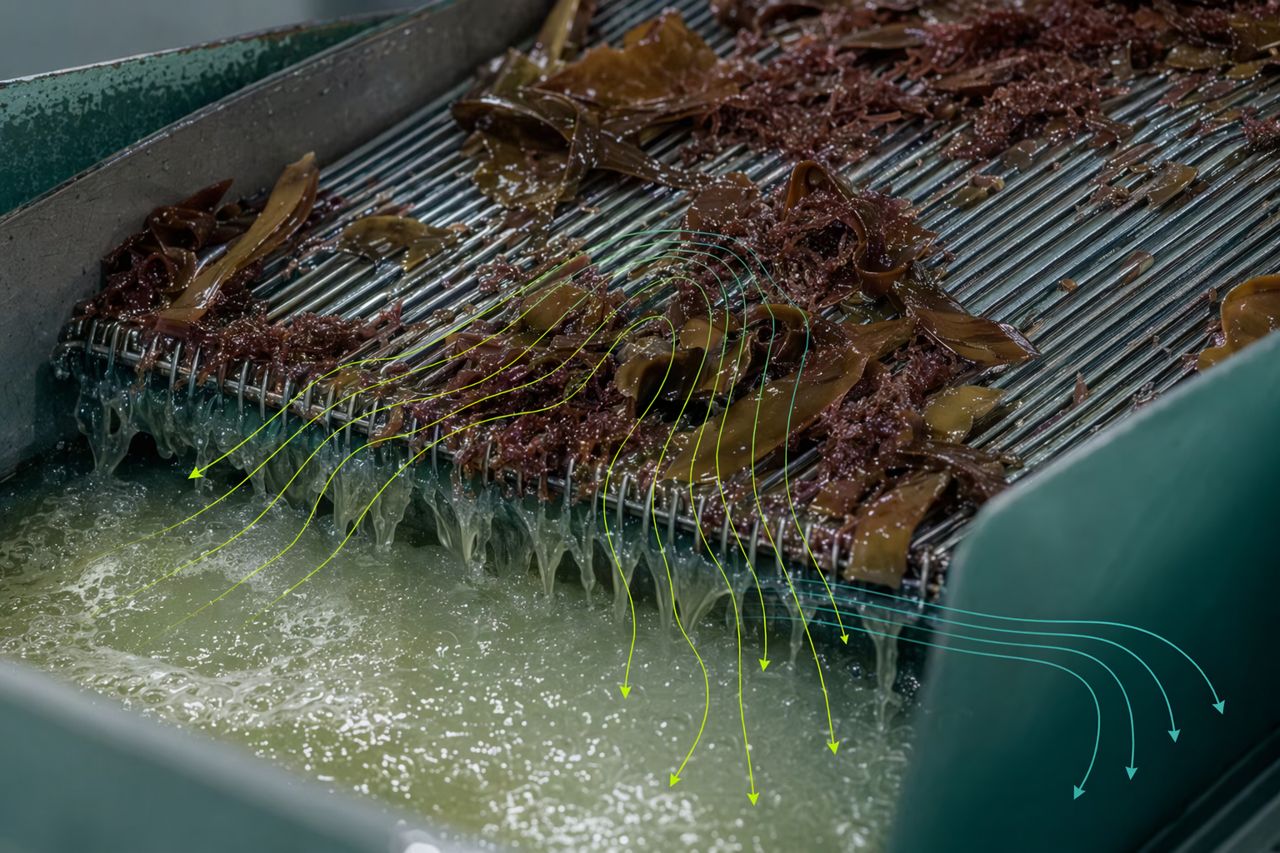
Cellulase can help loosen structural material and improve access to soluble fractions. In seaweed extraction, the value is not aggressive digestion. The value is controlled opening that supports liquor release, lower resistance in the slurry, and better handling through screens and centrifuges.
Xylanase for hemicellulose-linked structure
Xylanase can support targeted breakdown of plant-wall components that contribute to viscosity and poor drainage. For plants facing slow separation or inconsistent liquor recovery, xylanase evaluation can be a practical route to improved process flow.
Protease for haze, binding and separation support
Protease can be useful where protein-bound material contributes to haze, solids drag or downstream clarification challenges. It can also support cleaner separation in selected seaweed extract lines when matched carefully to process conditions and product requirements.
The full comparison by factory question is on enzymes for seaweed extraction lines.
Where enzymes fit in the plant
- Pre-extraction conditioning: soften structural barriers in hydrated or milled seaweed and give a more uniform slurry.
- Extraction support: improve access to soluble fractions and reduce difficult viscosity, for smoother agitation and heat transfer.
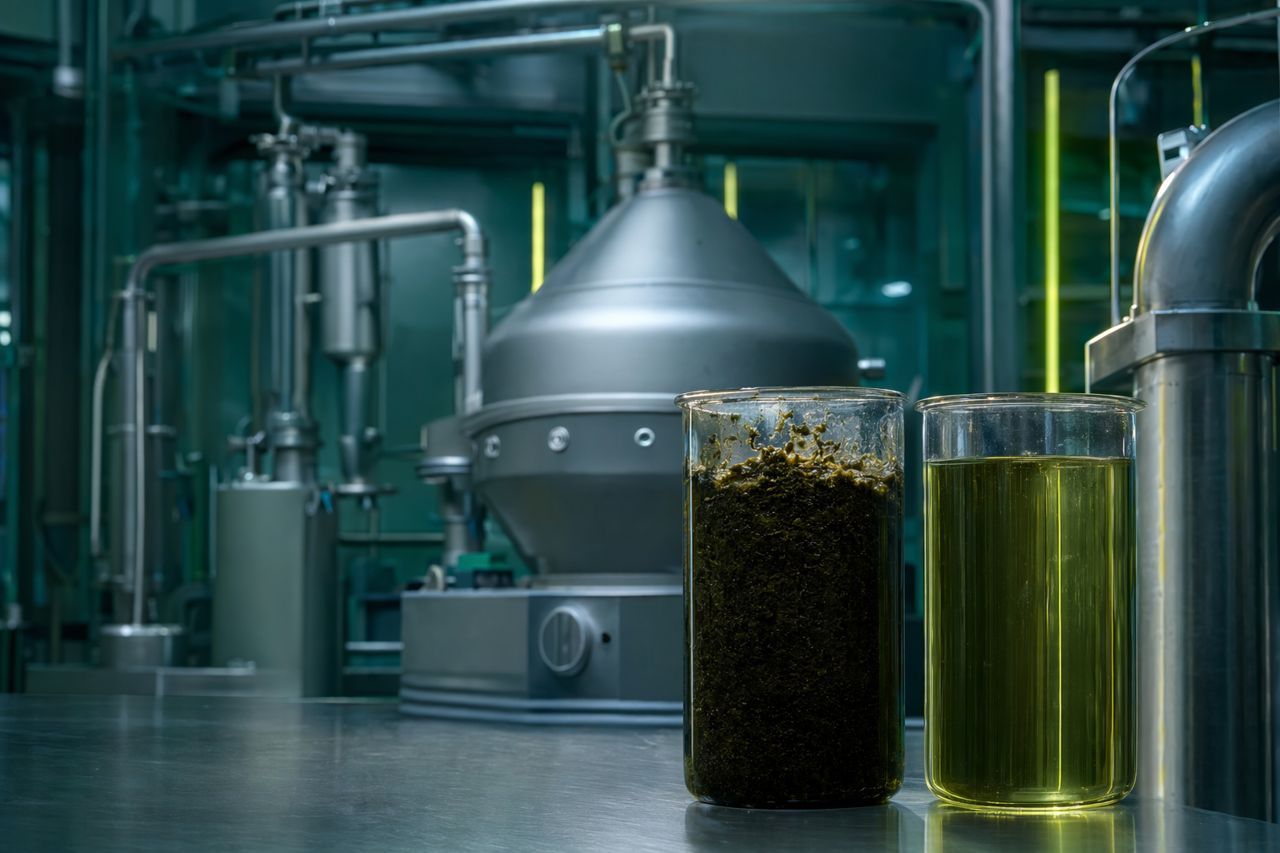
- Separation and clarification: a cleaner split between liquid and insoluble solids, less suspended load at centrifuges and filters.
- Finished specification control: an enzyme step designed around viscosity profile, clarity, soluble solids, color and batch-to-batch consistency.
We help you avoid enzyme overuse, under-treatment and poorly matched trials. The aim is a controllable step your team can measure against throughput, separation behavior, yield recovery and specification consistency.
From first inquiry to bulk orders
1. Define the bottleneck
Is the line limited by thick feed, poor drainage, cloudy liquor, overloaded solids handling or variable extract strength? We start with the commercial problem, then narrow the enzyme pathway.
2. Match enzyme function to substrate behavior
We help identify whether cellulase, xylanase, protease or a tailored combination is the best candidate for your seaweed type and target product.
3. Run bench and pilot comparisons
Your team compares treated and untreated material for liquor release, viscosity behavior, solids separation, downstream clarity and finished specification impact. The seaweed extraction enzyme trial checklist lists what to record.
4. Move to bulk supply
Once the process window is confirmed, Enzymeswave quotes bulk supply for production use: quantity per order, delivery rhythm and destination.
Request a quote
Wholesale and bulk supply for manufacturers, resellers and biotech companies. Use the inquiry form and include:
- Product: the enzyme class you want, or the process problem (viscosity, release, separation, haze)
- Quantity: trial amount, quantity per order, or expected monthly volume
- Destination: delivery country and, if known, port or city
- Helpful extras: seaweed type, target ingredient, process stage, temperature and pH window, separation equipment